Harbor Pulse
An ambient tabletop lamp that connects Boston residents to the health of their waterways — its water level rises and falls with the tide, and its light shifts color with the Charles River's water quality.
Problem Statement
While water is crucial to the culture, economy, and social fabric of Boston, most of its residents have little explicit interaction with the water bodies that support them. This has led to a general sense of apathy towards the health of these systems — embodied in songs like The Standells' "Dirty Water." To combat this, a solution needs to bring the watershed to the people who live inside it, making its health and quality real and tangible.
- Over 1.2 million people live inside the Charles River watershed, spanning 310+ square miles
- The Charles is 95% cleaner than in 1950, but is still often unsafe to swim in
- Only ~56% of Boston voters visit the waterfront in a normal year (Boston Harbor Now)
- College students make up 25% of the city's population, often with little sense of ownership over local waterways they're not from
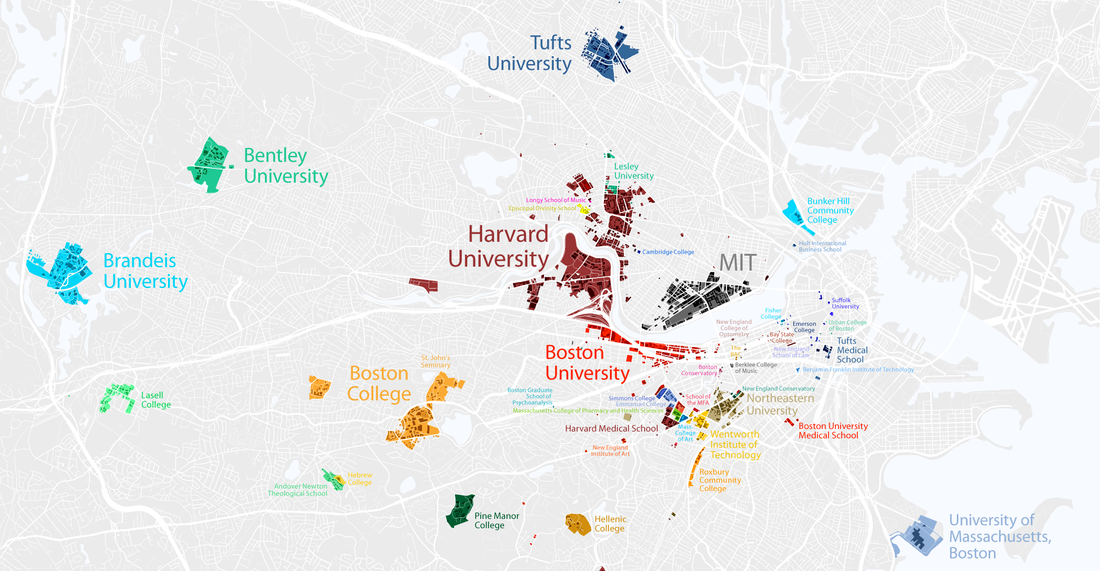
Design Inspiration
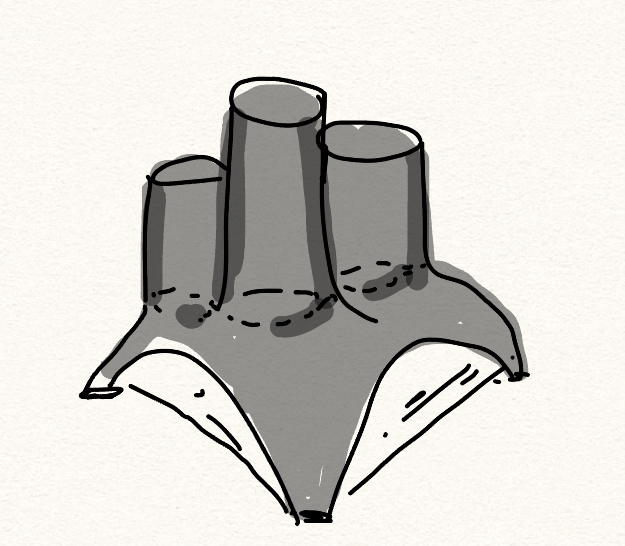
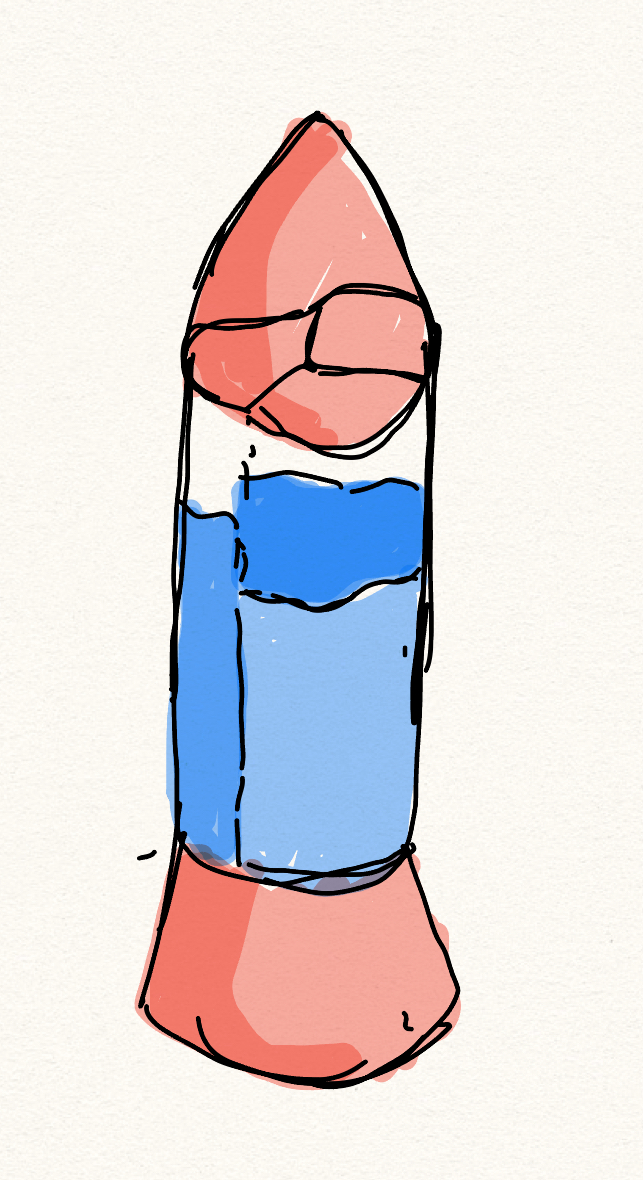
Iconic cultural objects like buoys and lobster traps are synonymous with New England. Buoys serve as warning markers for underwater threats — each color and stripe has a specific meaning and can identify ownership. We built a mood board around these maritime forms.
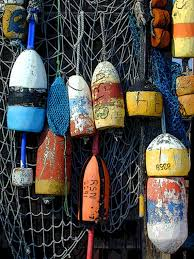
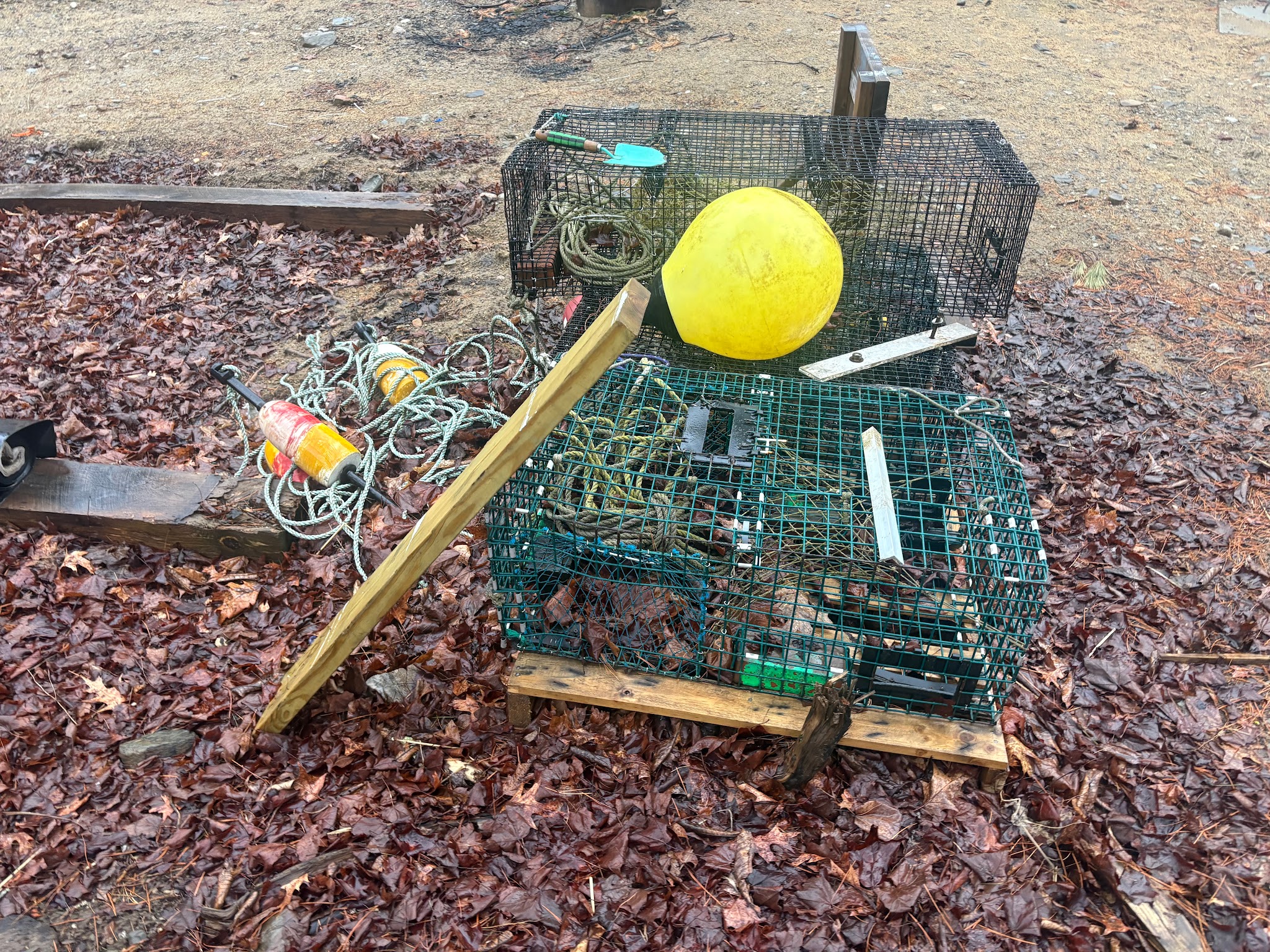
Design Evolution
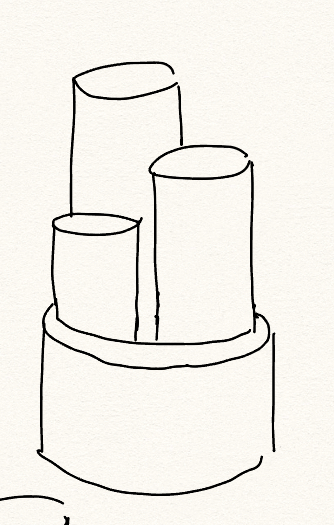
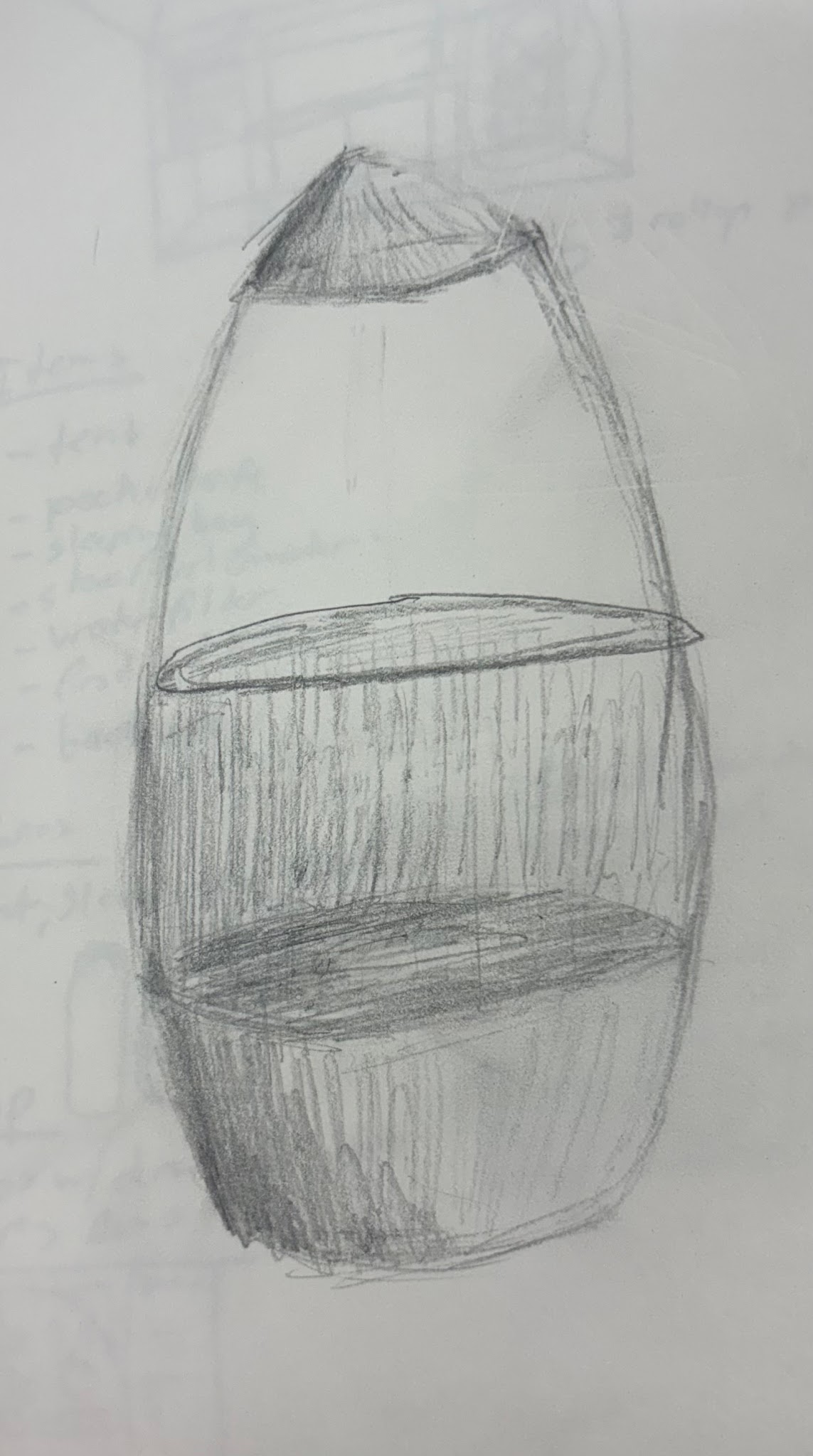
Our plan: create an everyday connection with Boston's waterways through a tabletop interactive device, with a live, intuitive display of Charles River water quality (dissolved oxygen %) and Boston Harbor tides.
How It Works
Pull Live Data
A scheduled script pulls live tide data from the Boston Harbor tide tracker and water-quality data from the EPA's Lower Charles monitoring.
Process & Send
Data is processed and sent to the Arduino board, which activates on a schedule.
Adjust Water Level
A peristaltic pump runs until the tube's water level matches the current tide — high tide fills it, low tide drains it.
Update Light Color
An LED updates color to reflect the river's health.
Try It Yourself
Tide: High · Quality: Healthy
Water Quality (DO%)
Tide
Currently running in demo mode — use the buttons above to preview how the lamp responds.
Fabrication
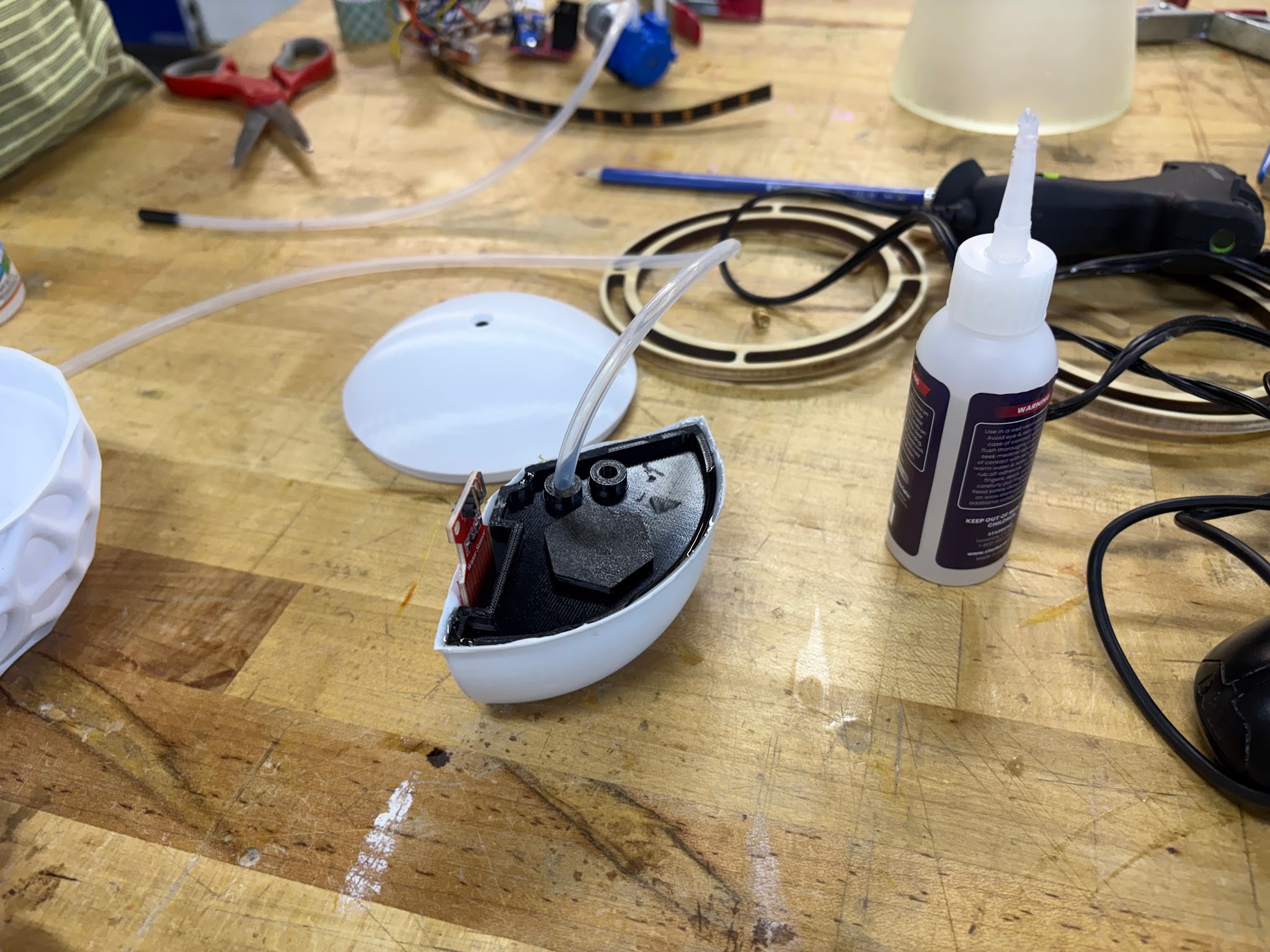
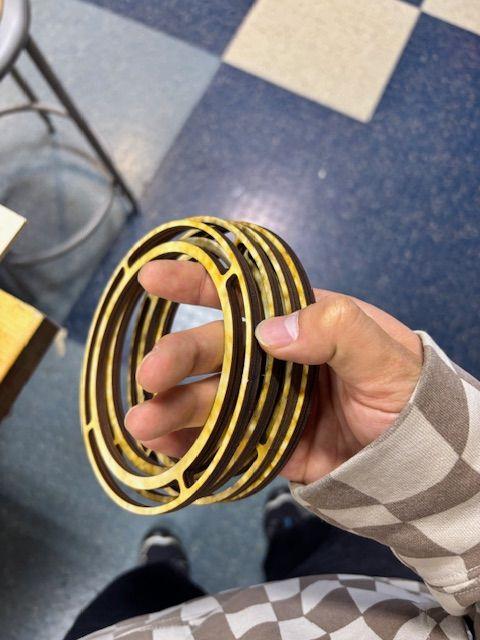
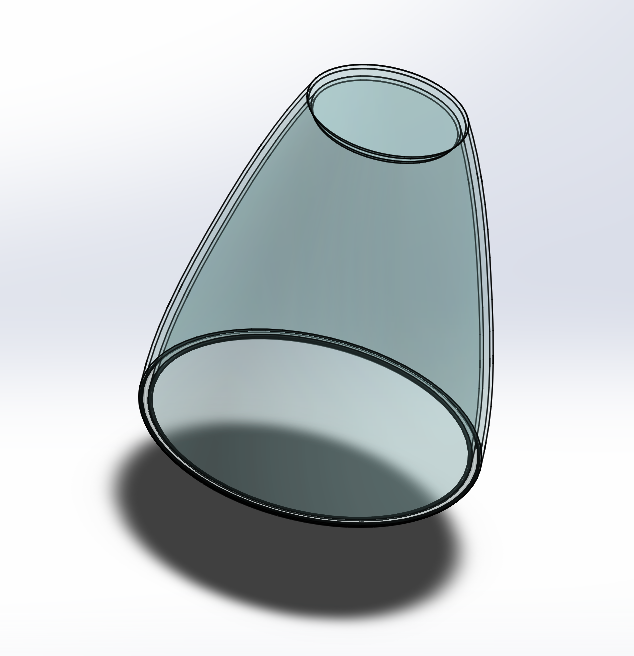
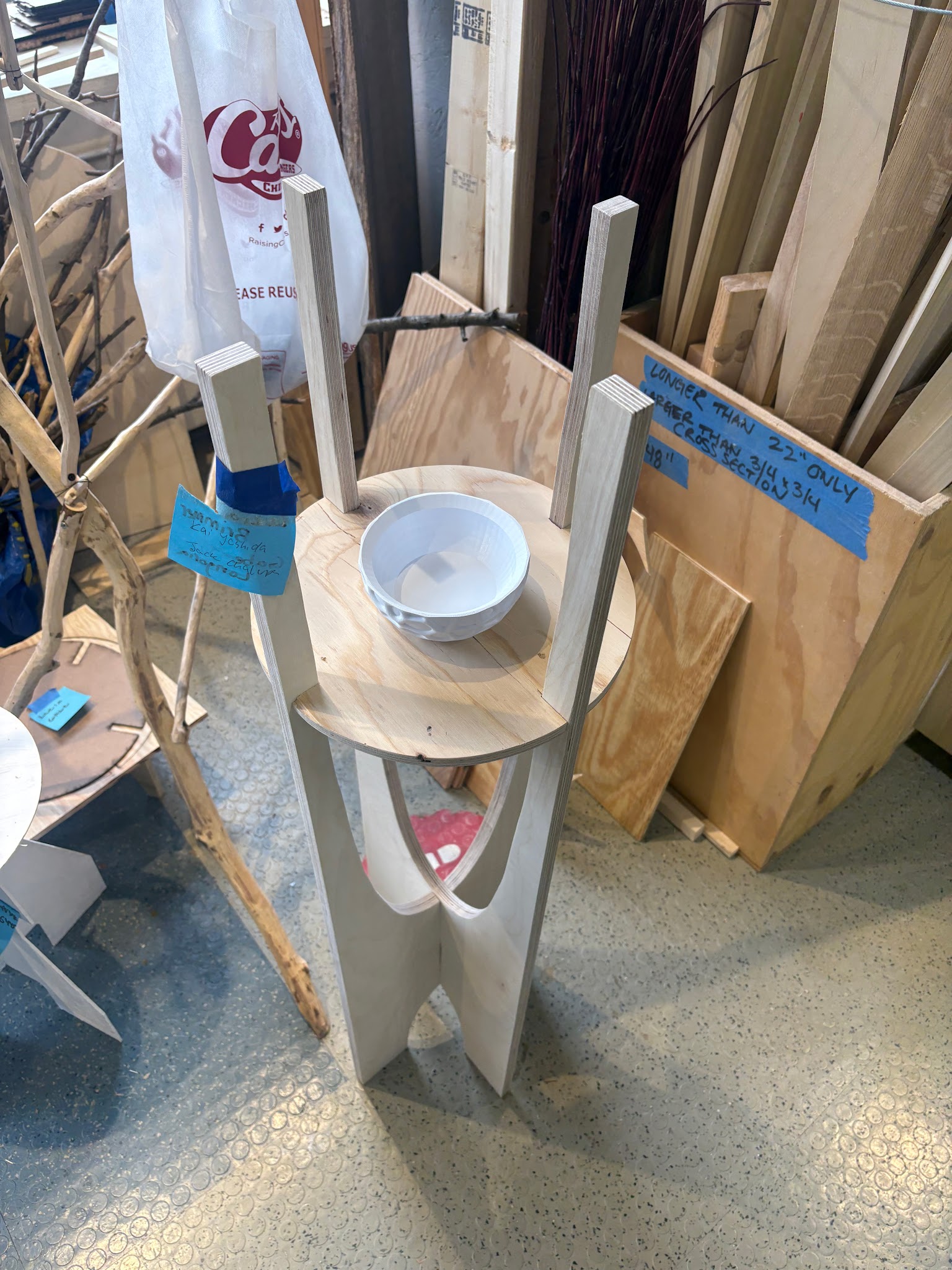
The lamp combines three fabrication methods: vacuum-formed shells for the outer dome, clear resin SLA printing for the waterproof inner tube, and a laser-cut, glue-laminated plywood band for the base ring.
- Vacuum forming: 3D printed molds, then vacuum-formed into clear/frosted plastic domes
- Resin SLA printing: clear enough to let water be visible and waterproof; prints are naturally hollow, though print bed volume is limited to 5 cubic inches
- Plywood band: laser-cut ¼" plywood rings, stacked and glued for 24 hours, finished with two coats of polyurethane for water resistance and a glossy look
- Wood stand: the plywood band was hand-stained and coated with polyurethane to give the base a warm, glossy finish that complements the lit dome

Electronics
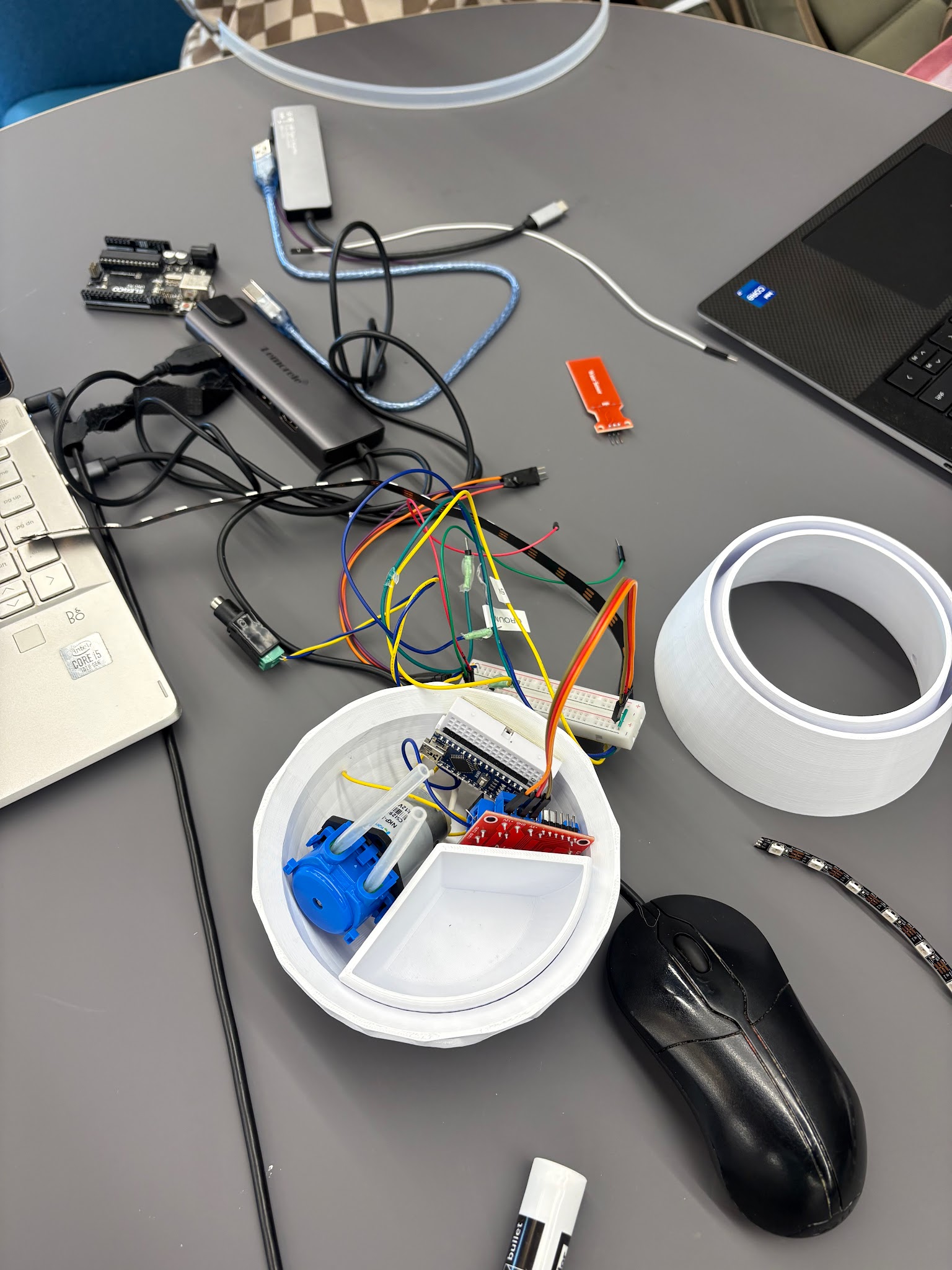
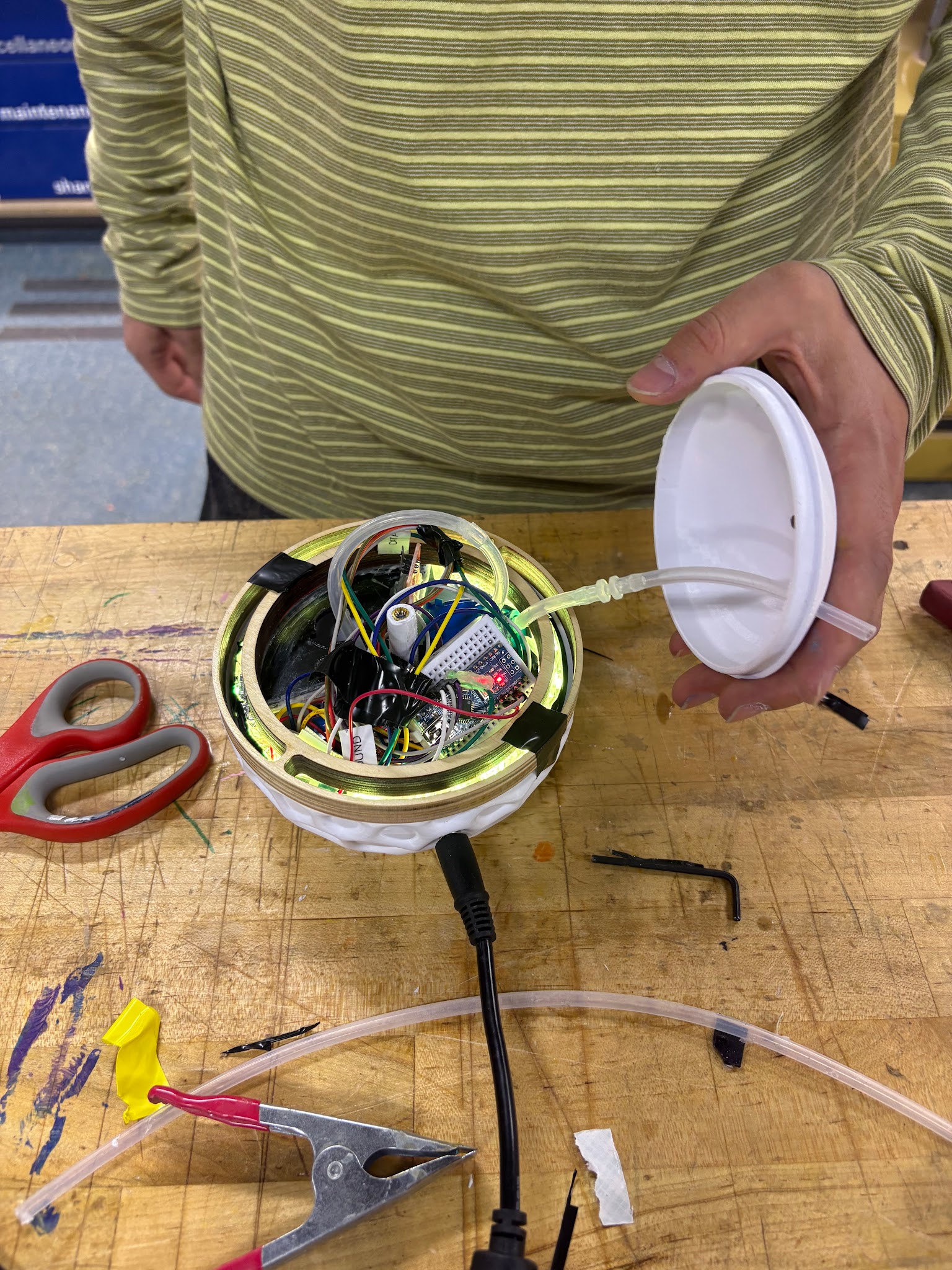
- Arduino Nano (downsized from an initial Uno)
- Water level sensor for calibration
- 12V motor driver
- Peristaltic pump
- LED lighting
Initial testing focused on validating each component individually before integration.
Assembly & Testing
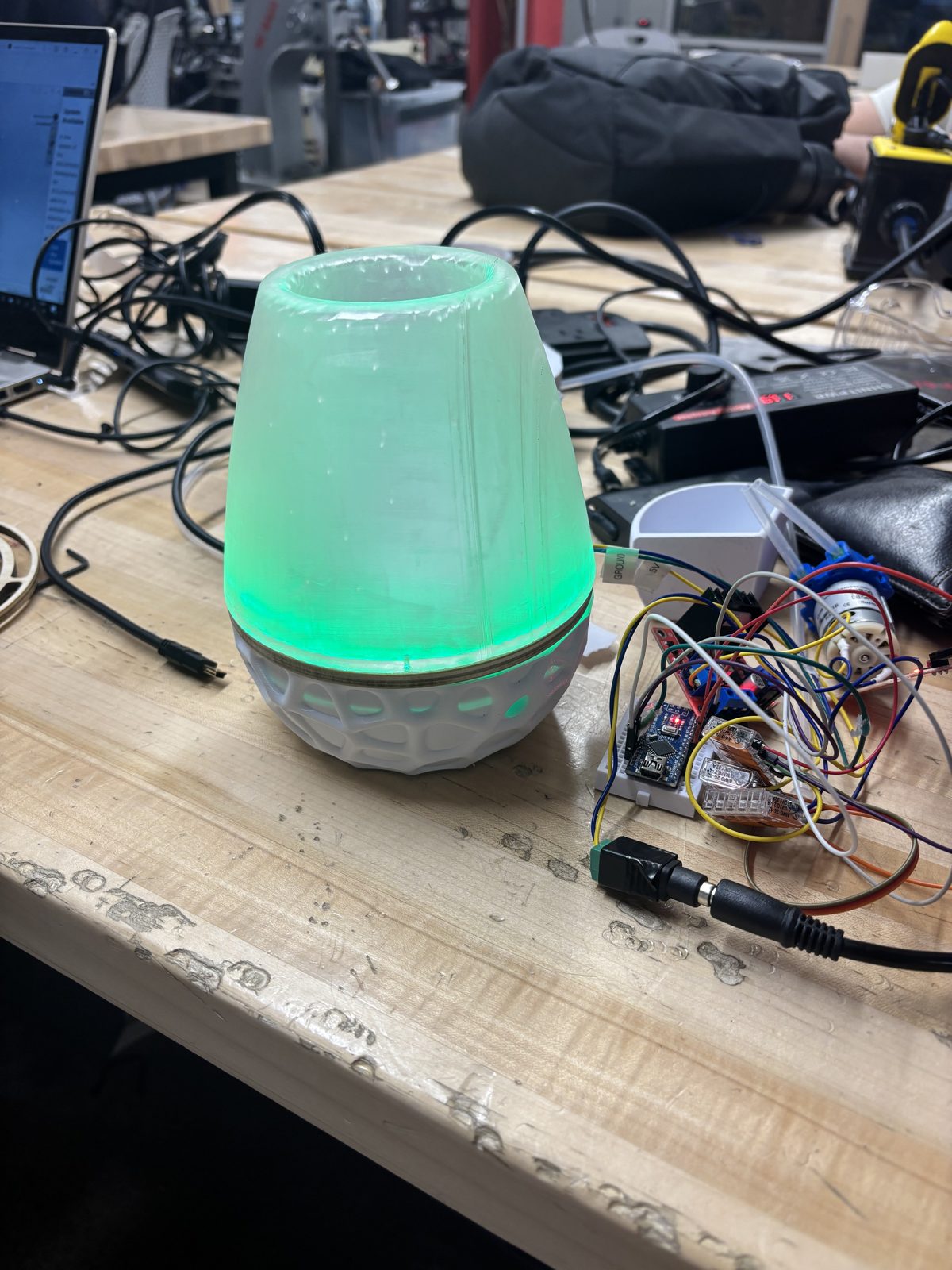
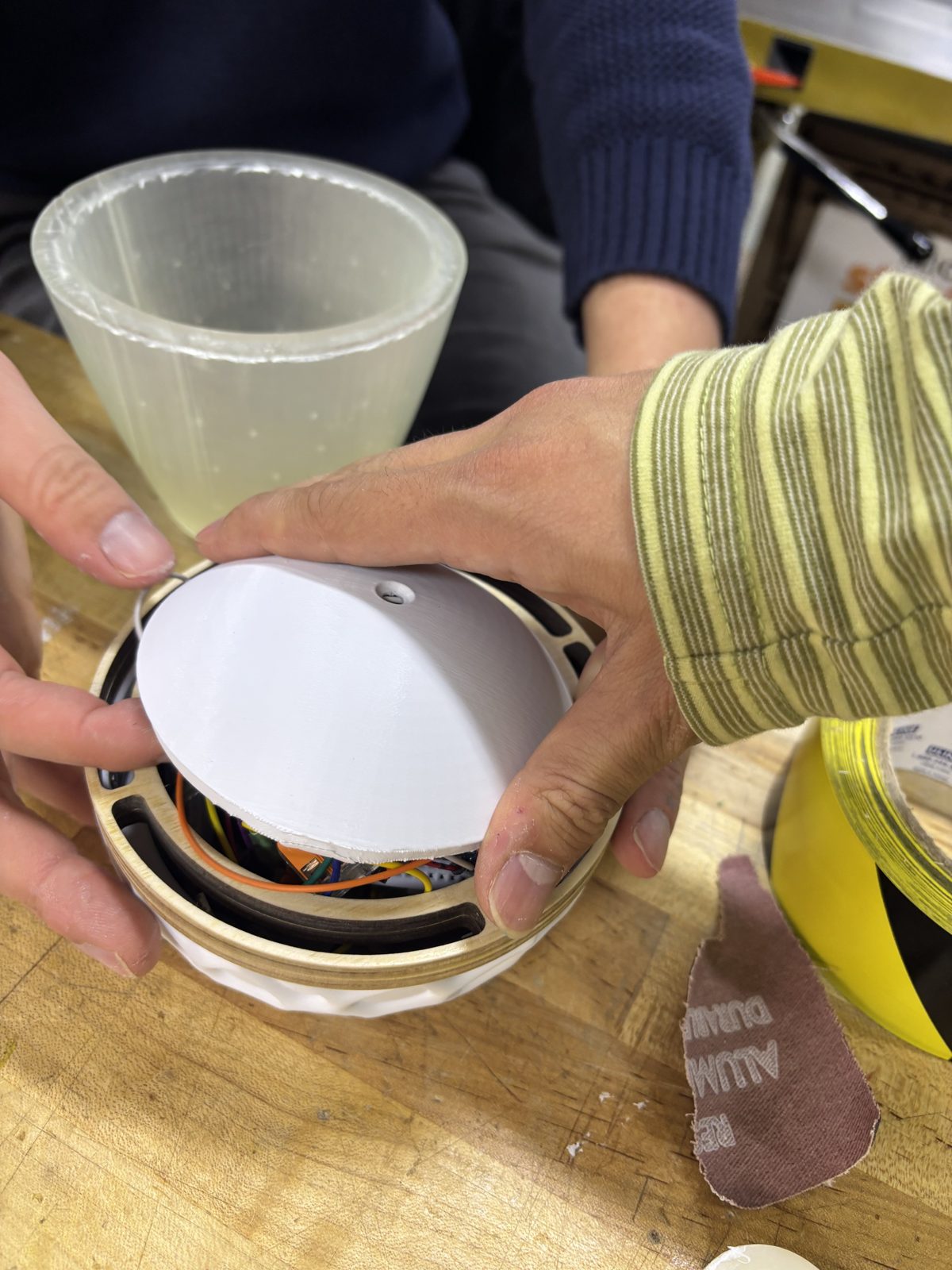
Water management, lighting, and Arduino control systems were brought together, with all parts connected through screws for easy access. We resolved light-visibility issues using aluminum tape and scrap plastic bags as reflectors and diffusers.
Color Exploration
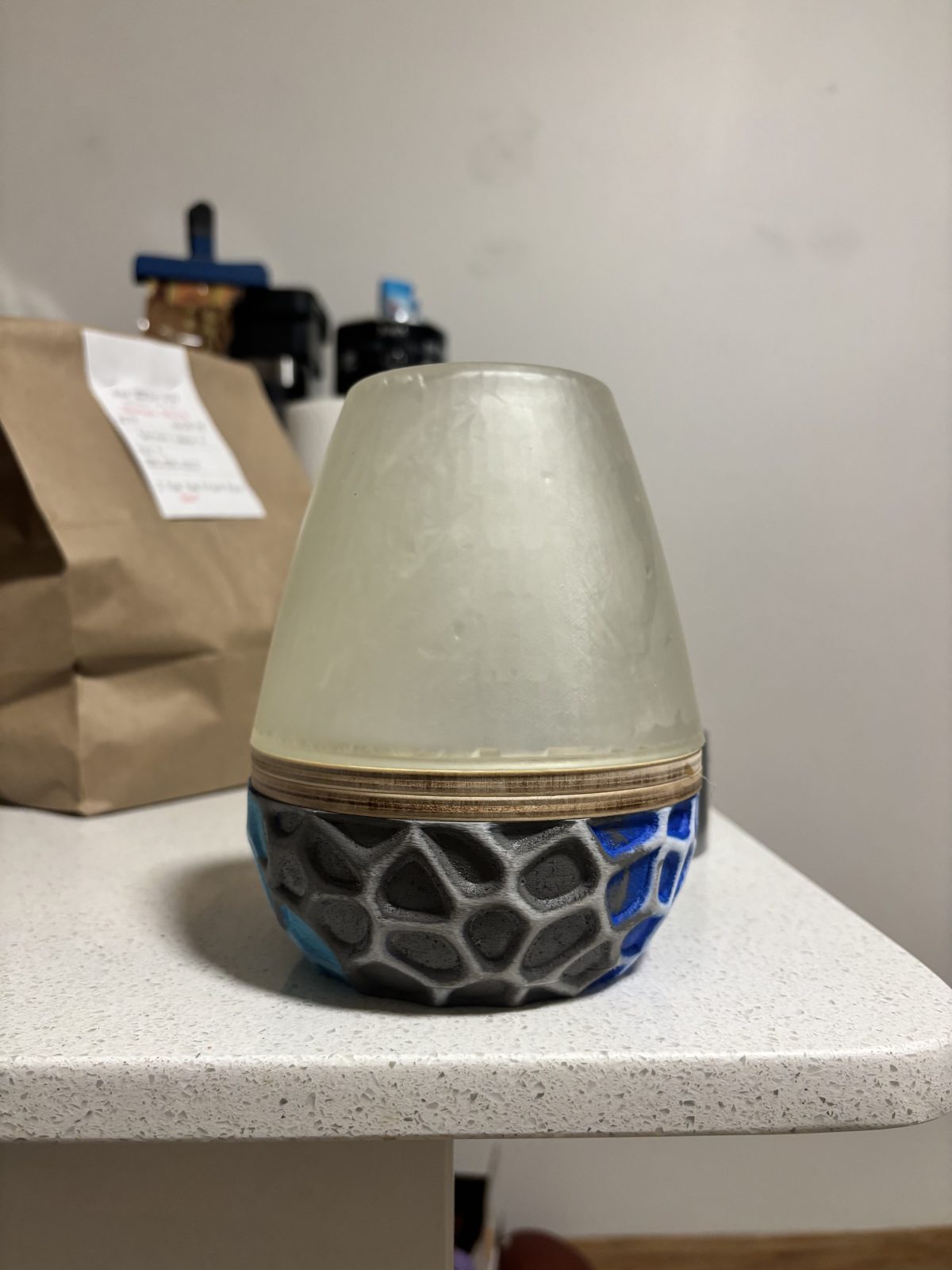
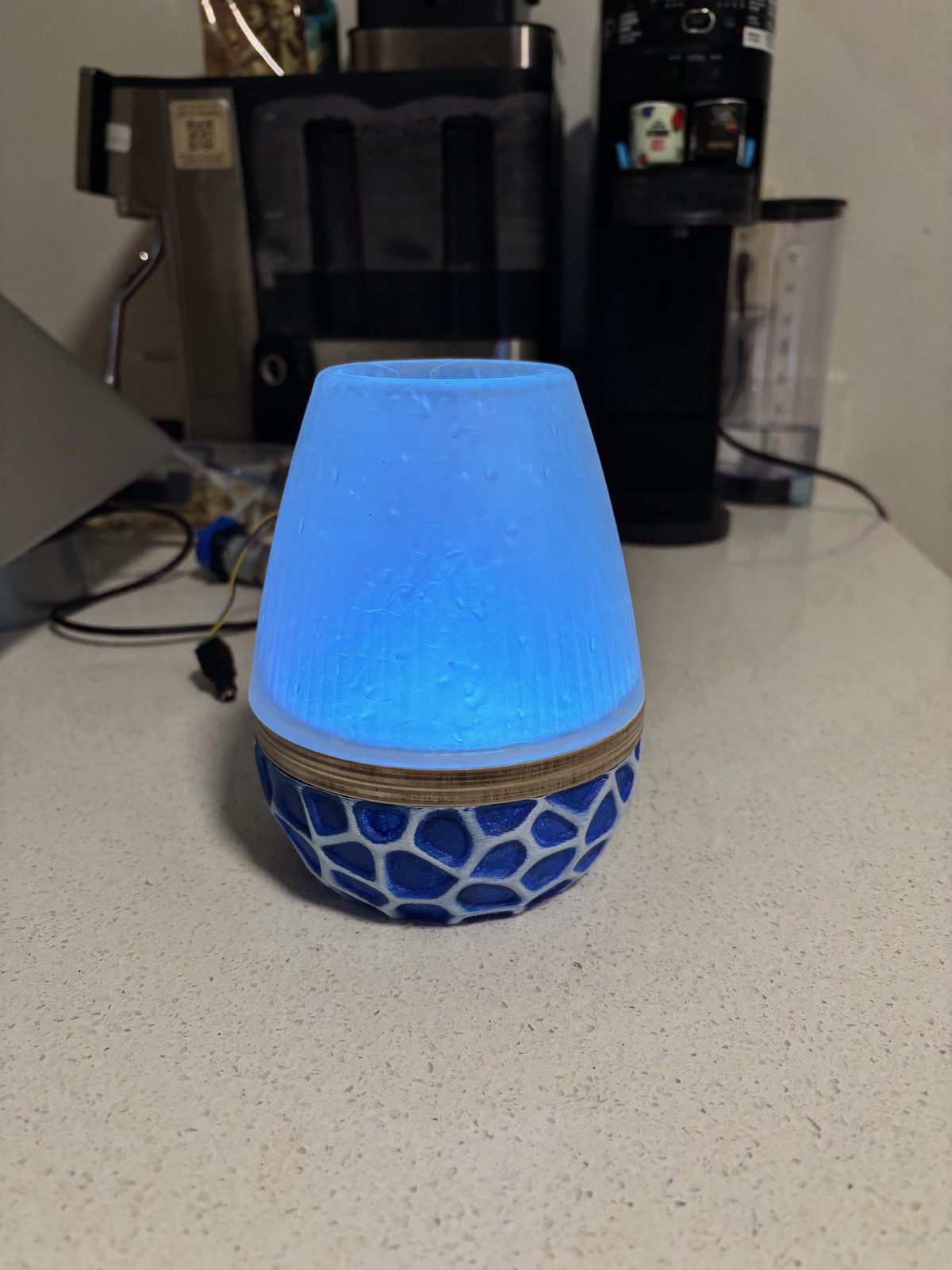
We tested different techniques to paint the textured base of the lamp, aiming to enhance its organic shape with a natural color that struck a balance between the resin print, wood band, table, and LEDs.
Connection with Water
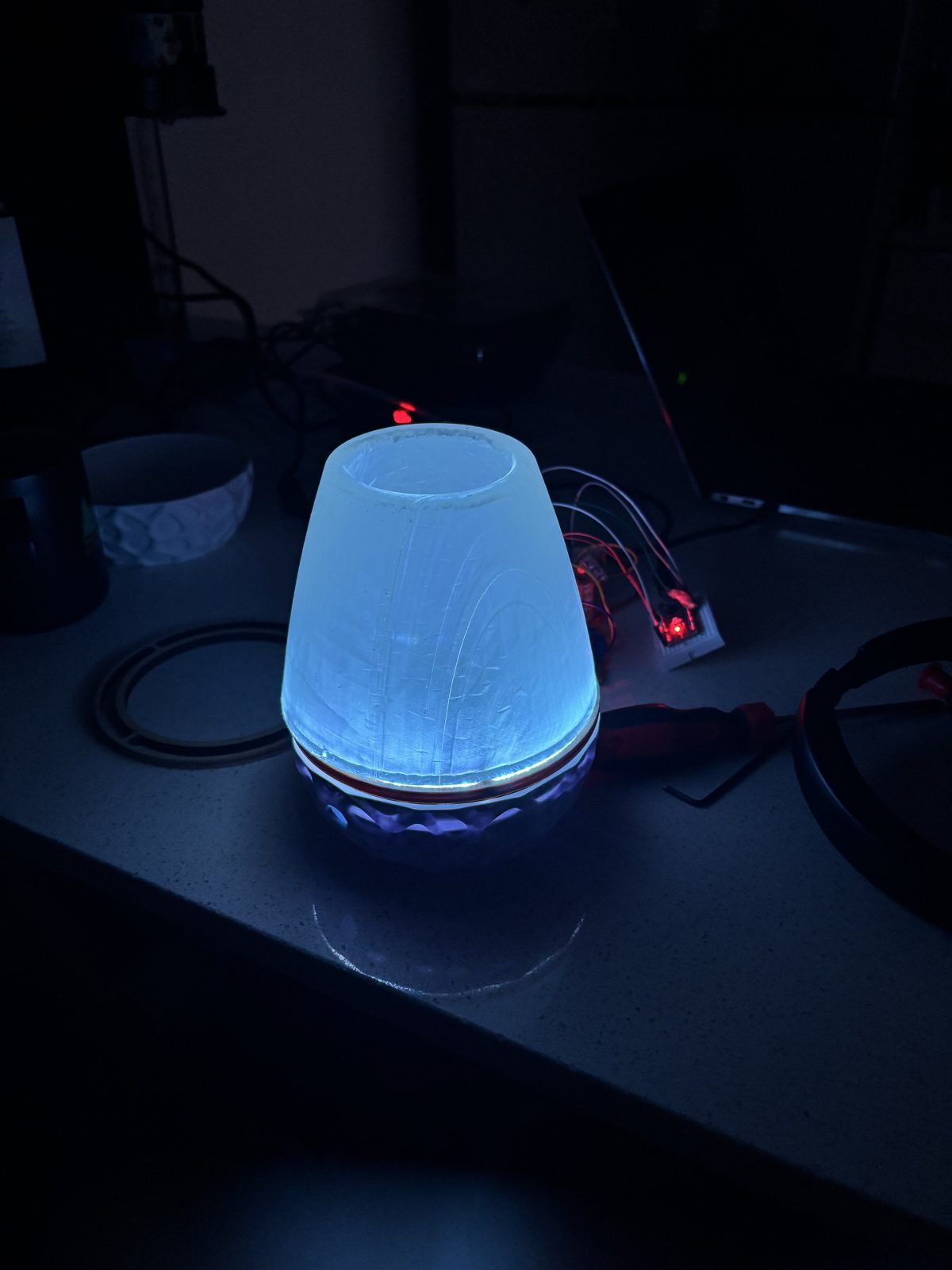
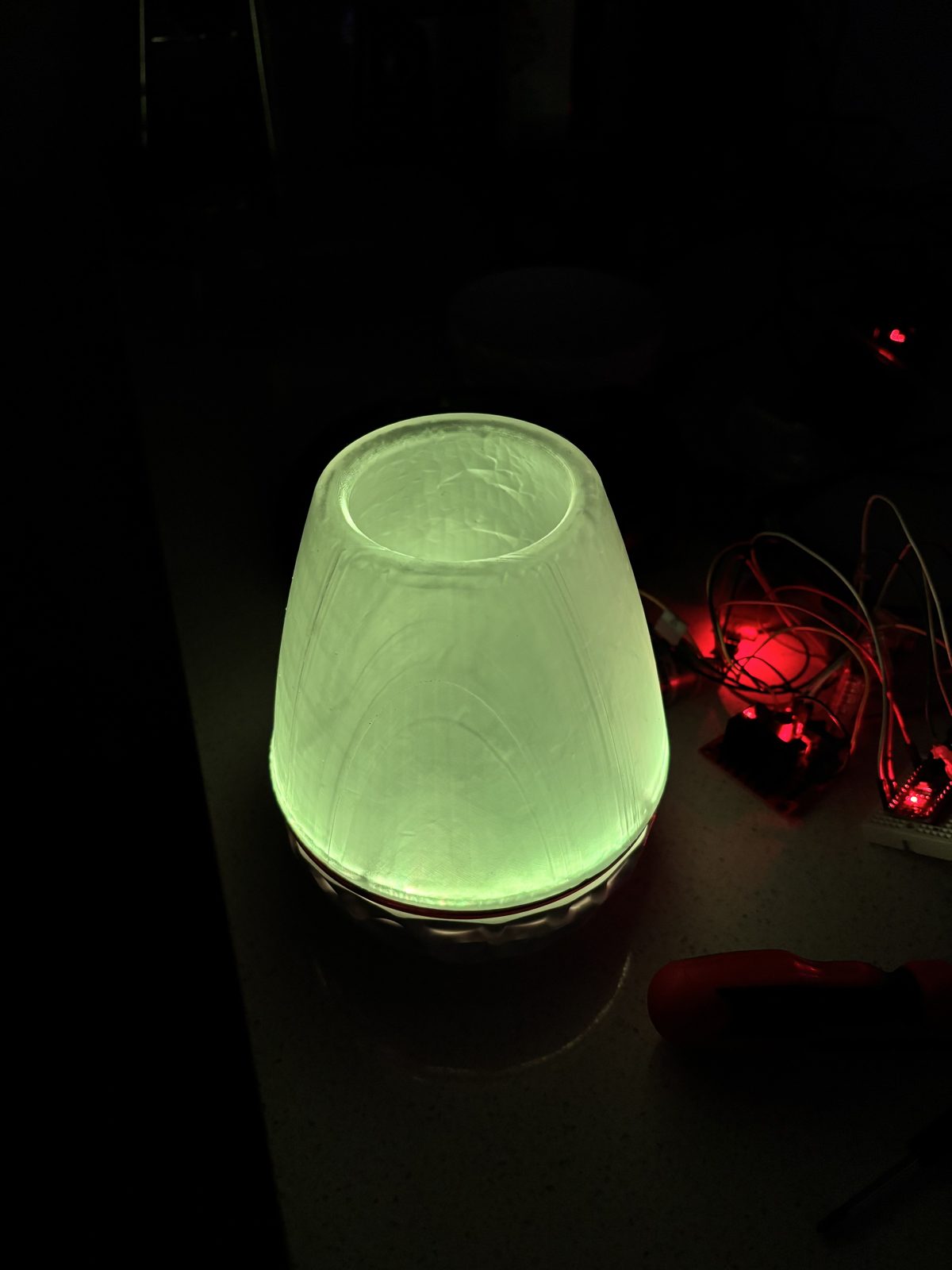
The conditions of the Charles directly change the lamp's water level and light color, using real water to refract and bend light. The overall geometry was inspired by the cultural objects of local Boston mariners, such as buoys and lobster traps.